Egregores by Mark Stavish
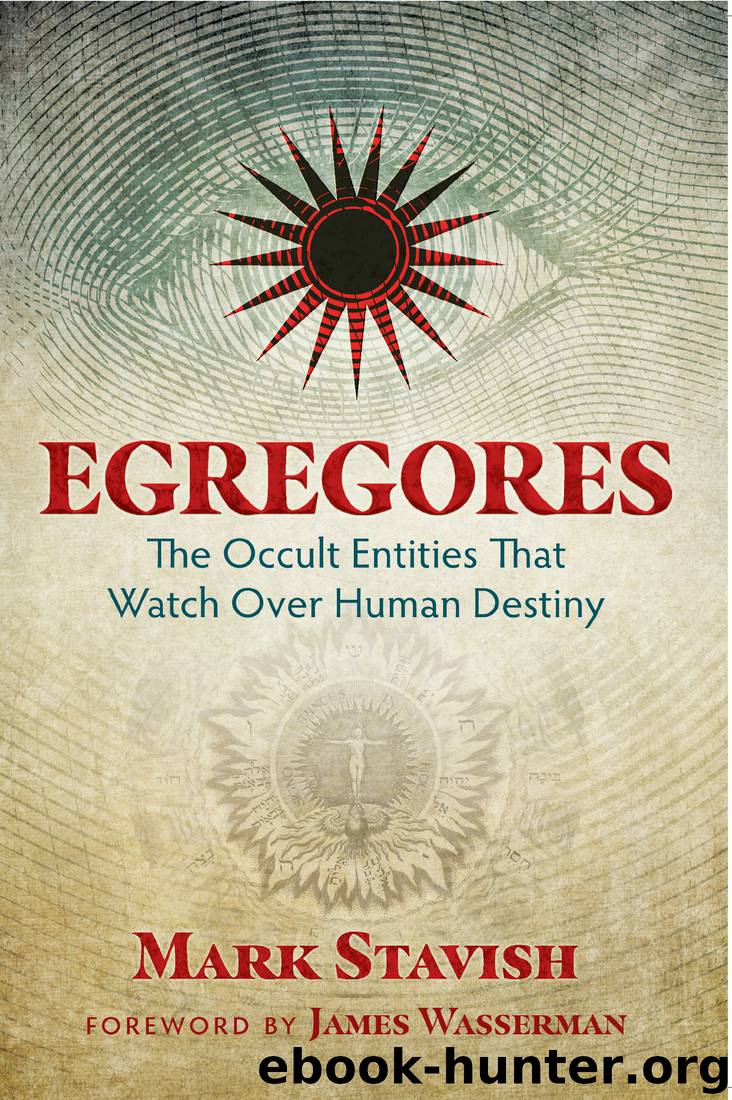
Author:Mark Stavish
Language: eng
Format: epub, mobi
Tags: Occult
Publisher: Inner Traditions/Bear & Company
Published: 2018-05-24T16:00:00+00:00
The search for knowledge is ultimately self-destructive for those who peek behind the curtain of reality.
We cannot escape the past, even the past of our ancestors.
We are not in control of our destiny—larger forces prevail.
The modern age is decadent and self-destructive and under threat from primitive and barbaric forces, both within and without.
Ancient evil persists into the modern world in inconceivable ways and, once realized, leads to insanity and death.
Lovecraft’s impact has been widespread and lasting. He has been a seminal influence on some of the greatest horror writers of the twentieth century. The mythos he created—or as some would tell us, “unconsciously revealed”—appears in television shows, movies, music, video, board and card games, and even occult practices. The powerful and overwhelming appeal of this man and his nightmares reveals something deep and powerful within the human psyche. Through his writing of the insignificance of humanity and of the individual, H. P. Lovecraft ultimately achieved fame and immortality. In a sense he has become the egregore in death of what he did not achieve in life.
The Necronomicon is by far Lovecraft’s greatest and most famous literary achievement. First appearing in his short story “The Hound” (written in 1922 and published in 1924), the Necronomicon is a fictional magical book, or grimoire. The book is purported to have been written by a character known as the “Mad Arab” Abdul Alhazred and contains the history and rites for summoning “the Old Ones.” The Old Ones are described as primordial beings who came to the Earth from the sky and now are trapped beneath the ocean in the mystical city of R’lyeh, beneath the South Pacific Ocean. Lovecraft stated that the idea and title for the Necronomicon came to him in a dream, although mystical texts of various sorts were a common literary device in gothic and horror writing. However, few fictional books have taken on the life and vitality of Lovecraft’s creation.
Lovecraft said that the title was from the Greek language and meant “an image of the law of the dead.” However, other translations of the word have been put forward, and Lovecraft’s etymology is in error. When asked about the Necronomicon, Lovecraft stated that most of the “terrible and forbidden books” were in fact quite boring, and it was more fun to create your own, as had so many of his friends and fellow authors.
What makes this all the more intriguing from the perspective of the study of egregores is that a close examination shows that nearly all of the famous magical texts in Western occultism were in some way contrived. The “Solomonic” and “Faustian” literature are prime examples. In Tibet a similar circumstance occurs with “revelations” of the origin and teachings attributed to the founder of Tibetan Buddhism, Guru Padmasambhava, as with the terma teachings. In fact, the entire history of Padmasambhava as generally taught did not exist until several hundred years after his death, when it was revealed to twelfth-century Tibetan figure Nyangrel Nyima Ozer (1124–1192) in a series of dreams and visions.
Download
This site does not store any files on its server. We only index and link to content provided by other sites. Please contact the content providers to delete copyright contents if any and email us, we'll remove relevant links or contents immediately.
Becoming Supernatural by Dr. Joe Dispenza(8277)
Crystal Healing for Women by Mariah K. Lyons(7965)
The Witchcraft of Salem Village by Shirley Jackson(7337)
The Four Agreements by Don Miguel Ruiz(6835)
Inner Engineering: A Yogi's Guide to Joy by Sadhguru(6835)
The Power of Now: A Guide to Spiritual Enlightenment by Eckhart Tolle(5854)
Secrets of Antigravity Propulsion: Tesla, UFOs, and Classified Aerospace Technology by Ph.D. Paul A. Laviolette(5412)
The Wisdom of Sundays by Oprah Winfrey(5206)
Room 212 by Kate Stewart(5183)
Pale Blue Dot by Carl Sagan(5080)
Fear by Osho(4781)
The David Icke Guide to the Global Conspiracy (and how to end it) by David Icke(4771)
Rising Strong by Brene Brown(4512)
Animal Frequency by Melissa Alvarez(4510)
How to Change Your Mind by Michael Pollan(4402)
Sigil Witchery by Laura Tempest Zakroff(4297)
Man and His Symbols by Carl Gustav Jung(4195)
The Art of Happiness by The Dalai Lama(4167)
Real Magic by Dean Radin PhD(4167)
